When AI recommends a business, how does it pick?
AI is the new shopping research layer, and that traffic converts better. What ChatGPT, Perplexity and Google AI Mode pull from, and how to get named.
Some links below are partner links. If you buy through one, The Memo earns a commission at no extra cost to you. How we make money.
In this briefing
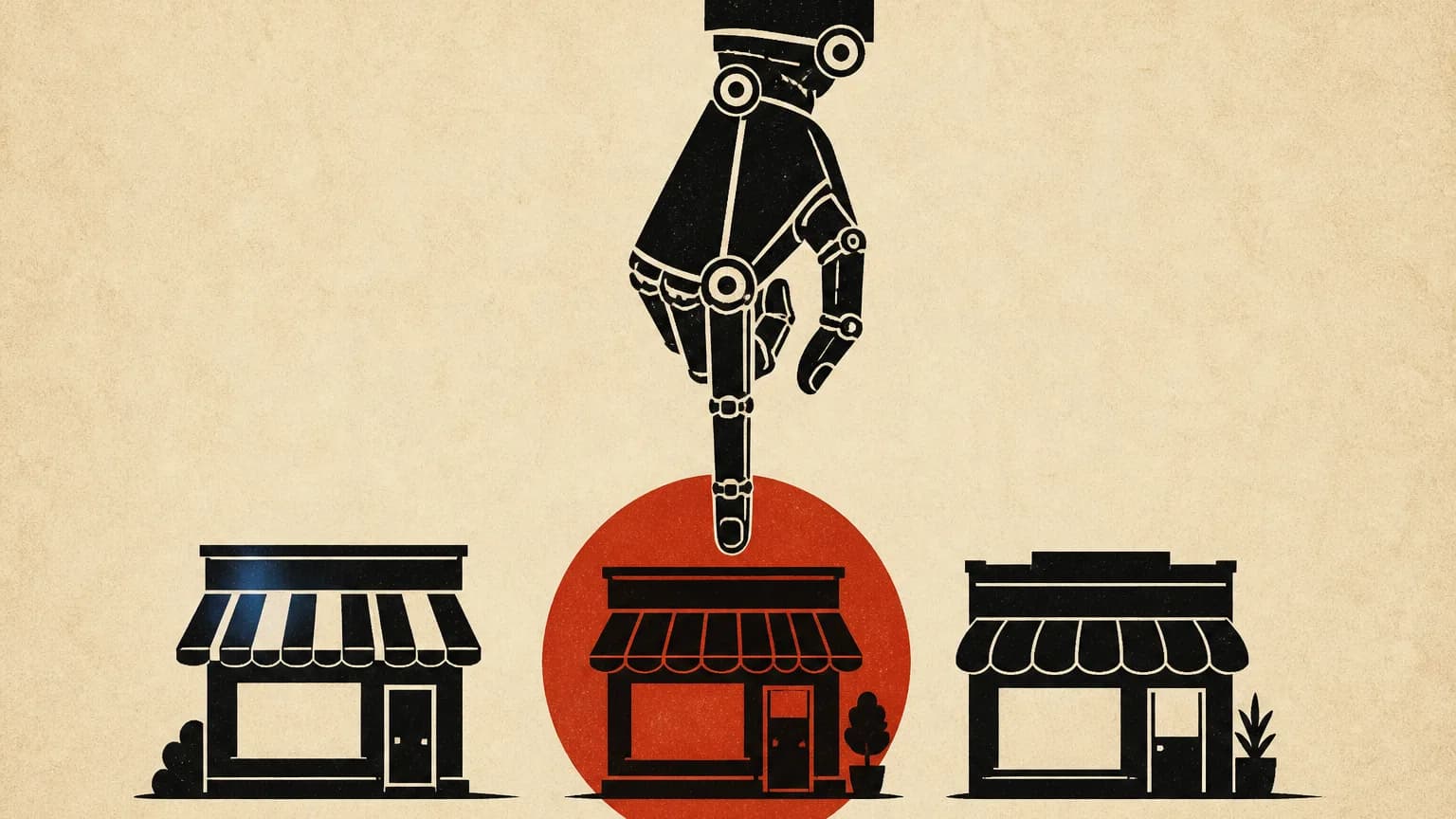
When an AI assistant names two businesses to a ready buyer and yours is not one of them, you were never in the running, and you will never know the customer existed. A growing share of buying starts exactly there: a question to an AI, not a search box. In a 2025 Adobe survey, 53% of US consumers said they had used AI to research a purchase. Adobe's analysis of more than a trillion retail visits found AI-driven traffic up several times over during the 2025 holiday season, and roughly a third more of those visitors went on to buy compared with other channels. So when ChatGPT, Perplexity or Google's AI Mode answers "what should I buy" or "who should I hire," how does it pick, and how do you get named?
US consumers, 2025 Adobe survey
AI-driven retail traffic vs other channels
What changed
All three big assistants made shopping and local recommendation a core feature in the last eighteen months.
- ChatGPT added shopping research in 2025, with sourced product details and comparisons. It briefly tested letting people buy inside the chat, then in March 2026 stepped back to sending buyers to the seller's own site. (CNBC reported the pivot.) The research stayed. The checkout went back to the merchant.
- Perplexity built a shopping flow with in-chat checkout and a free merchant program where retailers share their catalogs, product details and reviews. It leans hard on reviews.
- Google AI Mode pairs Gemini, Google's AI, with its Shopping Graph of tens of billions of product listings. In January 2026 Google announced new Merchant Center fields and a business-chat agent that answers questions about your business. (Google's announcement has the detail.)
The common thread. These systems answer from organized data and outside sources they trust. They do not browse your homepage and form an opinion. They assemble an answer from product feeds, business profiles, reviews and mentions on other sites.
Where the recommendations come from
 ChatGPTsourced product research, checkout back on the merchant
 Perplexityreferences reviews in nearly every answer
 Google AI ModeGemini plus the Shopping Graph
Why it matters
This is a different game from chasing a high spot in the old list of search links.
The traffic is small but high quality. Most website statistics tools do not yet label visitors an AI sent, so owners cannot see it happening. But people who arrive after an AI pointed them somewhere show up half-sold. That is why more of them buy.
Being recommended runs on two signals: readable by a machine, and mentioned by others.
- Data feeds. A feed is a structured file listing what you sell, which these systems read directly. Not in Google Merchant Center (Google's free product feed) or Perplexity's merchant program means largely invisible to their shopping answers. No feed, no mention.
- Reviews and mentions. Perplexity cites reviews in close to every product recommendation. Assistants lean on sources they trust: Google reviews and local press for local businesses, software review sites like G2 and Capterra, and Reddit for software. (Search Engine Land covers the local angle.) Fifteen stale reviews lose to two hundred fresh ones.
Same lesson as our AI Overviews briefing. Recognition is the currency. If the web barely mentions a business, the model has little reason to name it. The same shows up in how people search for brands by name.
Your move
You do not need every platform. Be clean, fed and reviewed. Five moves, in order.
- Get into the feeds. Sell products? Set up a Google Merchant Center feed and enroll in Perplexity's free merchant program. Biggest lever here. Plumbing, not marketing.
- Fix the Google Business Profile. That is your business listing on Google Maps and Search. For anything local, AI answers weight a complete, fresh one: right hours, real photos, current services, recent reviews. To the AI it is your storefront window.
- Make reviews a habit, not a campaign. Ask every happy customer for a Google review. Reviews feed local AI answers and the block of map results Google shows for local searches, and they are the cheapest signal you own.
- Add the basic schema. Schema is a set of invisible labels on your website that tell machines exactly what each page says: that you are a local business, what the product is, what the reviews say. On a mainstream website platform a plugin handles most of it. Tools like Surfer flag where pages are thin.
- Get mentioned where AI reads. Honest third-party listings, a comparison roundup, a Reddit thread where real people vouch for you. You cannot fake this, which is why the AI trusts it. Research tools like Semrush map which pages already rank for your category.
Your move this week
The wider shift sits in our AI search topic hub, and ChatGPT shopping discovery goes deeper on the assistant side.
Worth watching
Two things will decide how big this gets.
Where the checkout ends up. OpenAI tried owning the purchase, then handed it back to sellers. Google and Perplexity still push buying inside the chat. If that becomes normal, the product feed matters more than the website. If buying stays on your site, the job is to be the recommendation that earns the click. Same scarce-traffic math as our Meta Advantage+ briefing.
Measurement. Most owners cannot see AI-sent visitors in their statistics, so it is easy to ignore. As tracking catches up, expect more competition for these answers. Getting feeds and reviews right while it is quiet is the cheap version of this work.
Frequently asked questions
Do people really shop through AI assistants now?
Enough to matter. A 2025 Adobe survey found 53% of US consumers had used AI for shopping research, and Adobe measured AI-driven retail traffic up sharply over the 2025 holiday season, converting around a third better than other channels. Not the main channel yet, but growing fast, and the visitors buy.
How does an AI assistant decide which business to recommend?
It pulls from structured product and business data (Google Merchant Center, schema markup, Google Business Profile) and from third-party sources it trusts (reviews, comparison sites, Reddit, press). Perplexity references reviews in nearly every product answer. Missing or messy info makes you easy to skip.
Is this different from normal SEO?
It overlaps but is not the same. Classic SEO chases a ranking position. AI recommendation is about being a clean, well-reviewed, often-mentioned source the model can quote with confidence. Being known and being machine-readable beat a single keyword ranking.
What is the fastest thing a small business can do?
Two things. Get a product feed into Google Merchant Center if you sell products, and build a steady habit of asking happy customers for Google reviews. Both feed directly into what AI surfaces show, and neither needs a developer.
About The Memo
The daily brief on AI and marketing. What changed in AI tools, search, ads and growth, why it matters, and the move to make this week. How we work
The daily Memo
One short email each morning when something in AI or marketing actually changes, with the move to make.
Free. Every morning. Unsubscribe anytime.
Keep reading
Related briefings

AI Overviews are eating top-of-funnel clicks
Google's AI Overviews now answer most searches on the page. Here is what that does to small-business traffic and the moves that still win customers.
The move. Stop chasing clicks that are vanishing. Own branded search, build buying-intent pages, win local on Maps.

Best SEO tools for small business in 2026
The SEO tools small marketing teams actually keep in 2026: Surfer SEO, Frase, and SEMrush compared by job, real pricing, and where each falls short.
ChatGPT shopping is now product discovery, not just search
AI assistants now name products and businesses directly. Here is what changed in 2026 and the feed-and-review move a small shop should make.
The move. Assistants now recommend products from feeds and reviews, not your homepage. Get into Merchant Center and the merchant programs, then grow reviews. No feed, no mention.